You're Not Just Playing Music — You're Conducting an Experience: The Real Art of Reading Your Crowd
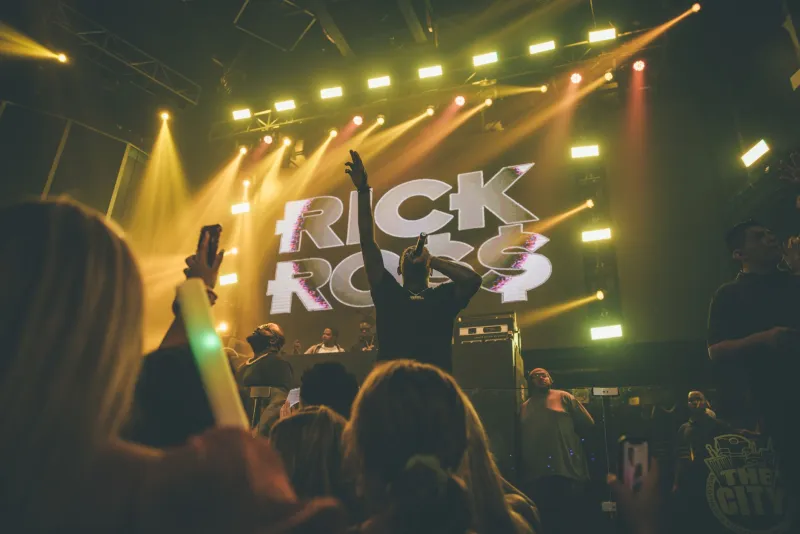
Let's be real for a second. You spent three weeks curating that playlist. You sourced the good liquor, you strung the lights just right, and you even remembered to put out extra ice this time. But somewhere around 10:47 PM, the energy in the room just... dipped. People started drifting toward their phones. Two couples migrated to the kitchen. The dance floor — which was popping twenty minutes ago — suddenly looked like a CVS parking lot on a Tuesday.
What happened?
Nothing broke. Nobody left. The vibe just shifted, and you missed it.
The difference between a good host and a great host isn't the playlist or the aesthetic or even the snack spread. It's the ability to read a room in real time and respond without making it weird. Think of it like being a DJ, a therapist, and a stage director all at once — except nobody can know you're doing any of it.
Here's how to actually get there.
Body Language Is the Only Setlist That Matters
Before you touch a single track or dim a single light, you need to become a student of your guests. Not in a creepy way — in a present way. Hosts who are constantly in the thick of conversations or glued to their own drinks miss the macro picture entirely.
Train yourself to do a casual room scan every 15–20 minutes. What you're looking for:
- Cluster behavior. Are people spreading out and mingling freely, or are they clumping into tight, static groups? Tight clusters usually mean the energy is low and people are retreating into comfort zones.
- Body orientation. When guests are engaged and vibing, their bodies open up — they face outward, gesture more, make eye contact across the room. When the night is fading, shoulders turn inward and eye contact drops.
- The kitchen migration. This one's iconic. When people start gravitating toward the kitchen or any peripheral space, it's almost never about the food. It's about escape. They're subconsciously looking for a quieter, lower-pressure zone.
- Phone behavior. A room full of people scrolling is a room that's checked out. A room full of people filming is a room that's lit. Know the difference.
Once you can read these signals, you're not reacting to a dead party — you're preventing one.
The Strategic Playlist Pivot (Without the Whiplash)
Here's where most hosts go wrong: they try to rescue a dipping vibe by throwing on the most hype song they own. Cardi B drops, the bass hits, and... nobody moves because the transition was too jarring. You just reminded everyone that someone's trying to force fun, and nothing kills a party faster than forced fun.
The real move is what DJs call a bridge track — something that sits between where the energy is and where you want it to go. If the room has cooled into a chill, conversational vibe, don't nuke it with "Sicko Mode." Slide in something mid-tempo with a recognizable hook. Think Drake's more melodic cuts, early Rihanna, or a classic like Lauryn Hill's "Doo Wop." Something people know and feel good about, that quietly invites movement without demanding it.
From there, you can build. Incrementally. Song by song, you're nudging the BPM up, the bass a little heavier, until the room remembers why they came out tonight.
Also — and this is crucial — pay attention to what made the room peak the first time. Was it a specific era? A particular artist? A tempo range? Your guests already told you what they love; you just have to remember it and revisit it strategically.
Lighting Is a Mood Dial, Not a Switch
If you're still thinking about lighting as just "on" or "off," you're leaving one of your most powerful tools on the table. Lighting shifts crowd energy in ways that feel almost subconscious — guests don't notice the change, they just feel differently.
Bright, warm lighting encourages conversation. It's social, it's open, it's great for the early part of the night when people are still getting comfortable. As the night progresses and you want the energy to shift toward dancing and movement, cooler tones and lower ambient light do a lot of the heavy lifting for you. Add in some color — deep purples, electric blues, or even a slow color cycle — and you're literally setting a different scene without saying a word.
Smart bulbs like Philips Hue or LIFX give you this kind of control from your phone, and they're genuinely worth the investment if you host regularly. Pair a lighting shift with a playlist pivot and you've just executed a full vibe reset without touching a single guest.
Social Prompts: The Move That Looks Like Nothing
Sometimes the crowd just needs a little ignition, and the cleanest way to provide it is through what we'd call a social prompt — a low-key action that gets bodies moving and mouths talking without feeling like a planned activity.
This could be as simple as grabbing a drink and walking to the middle of the room, which naturally draws a few people toward you and breaks up the wall-hugger effect. It could be putting out a new snack or drink option in a central location, which creates organic movement and gives people a reason to reposition. It could even be introducing two guests who don't know each other with an enthusiastic, "Y'all need to talk — you're both obsessed with [thing]." Suddenly there's a new conversation happening, energy is moving, and you didn't have to announce a single thing.
The goal is always to look effortless. The best hosts make it seem like the party just happened to get better, not that someone steered it there.
Know When to Let It Wind Down
This one's uncomfortable but necessary: sometimes the right read is knowing when the night has run its course — and honoring that gracefully.
A party that ends on a high note, while people are still laughing and hugging goodbye, is infinitely more memorable than one that limps past 2 AM with six people and an awkward silence. When you sense the energy naturally plateauing and the crowd thinning, don't fight it. Wind the playlist down intentionally. Bring the lights up slightly. Let the room breathe.
Guests will leave feeling like the night was complete — not like they survived it.
The Real Flex Is Invisibility
At the end of the day, the highest compliment you can get as a host isn't "great party" — it's "I don't know how you do it, everything just flowed." That's the goal. Not to be seen working, but to be felt everywhere.
Reading the room is a skill, and like any skill, it gets sharper with practice. Pay attention. Stay present. Trust your instincts. And remember: you're not just playing music — you're conducting an entire experience, one subtle shift at a time.