Forget the 'Gram: Why Gen Z Is Trading Clout Parties for Real Ones
There was a moment — somewhere between 2015 and 2019 — when going to a party meant performing for a camera. You dressed for the photo. You posed for the Story. You posted before the night was even over. The party wasn't really the point; the documentation of the party was.
But something has changed. Quietly, deliberately, and with a kind of cultural confidence that only Gen Z can pull off, the house party is being reclaimed. Not as a backdrop for content — but as an actual experience.
The Post-Performative Shift
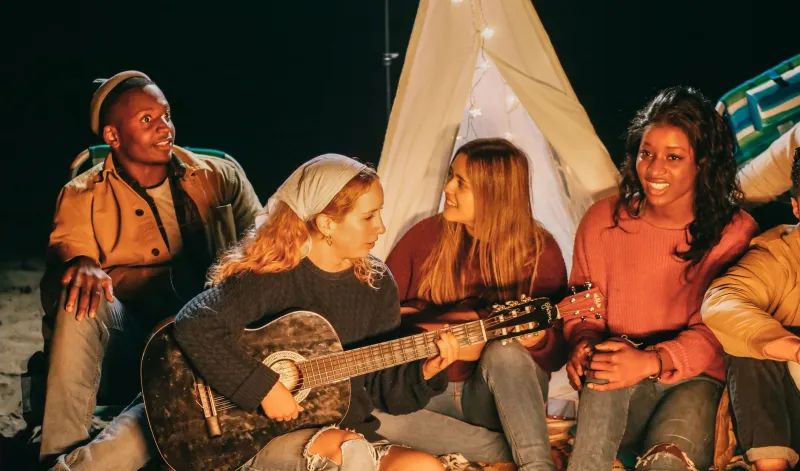
If you've been to a gathering thrown by someone in their early-to-mid twenties lately, you may have noticed something different in the air. Fewer ring lights. More mismatched furniture. Somebody's older cousin's vinyl collection spinning in the corner. Candles everywhere. A playlist that actually has a personality.
This isn't an accident. It's a deliberate rejection of the hyper-curated, aspirational party aesthetic that dominated social media for years.
"My friends and I stopped caring about whether the party looked good on camera," says Jordyn, 23, a college student and frequent host based in Atlanta. "We started caring about whether it felt good to be there. Those are completely different goals."
That distinction — between looking good and feeling good — is at the heart of what's driving this shift. Gen Z, more than any generation before them, has grown up with an acute awareness of how social media distorts reality. They've watched influencer culture eat itself. They've experienced the hollow feeling of a night that looked incredible online but felt empty in person.
The response? Authenticity as a design principle.
Hip-Hop Culture as the Blueprint
Here's what's fascinating about this movement: hip-hop culture has always been here. The intimate cipher. The basement session. The cookout where the music is loud and the food is real and nobody's performing for anybody. These aren't new concepts — they're foundational to Black American social culture, and they've been the blueprint all along.
What's happening now is that a broader generation is finally catching up to what hip-hop communities have understood for decades: the best gatherings aren't the most expensive or the most Instagrammable ones. They're the ones where people actually connect.
"Hip-hop was born in community spaces," says DeAndre Collins, a cultural commentator and event organizer based in Houston. "The block party, the house party, the rec center — those were sacred spaces. Not because they were fancy, but because they were ours. Gen Z is tapping into that same energy, whether they realize it or not."
Artists like Kendrick Lamar, Tyler the Creator, and Noname have long championed this ethos in their music and public personas — a preference for realness over flash, depth over surface, community over clout. It's not surprising that the generation raised on their music would internalize those values and bring them into their social lives.
What These Parties Actually Look Like
So what does the anti-performative Gen Z house party actually look like in practice? We asked around.
According to the hosts and attendees we spoke with, several themes keep coming up:
Intentional guest lists. These aren't open-invite, post-your-location affairs. People are throwing smaller, more curated gatherings where everyone in the room actually knows each other — or is genuinely excited to meet someone new. "I'd rather have 15 people who are really present than 80 people who are just there," says Amara, 25, a Brooklyn-based graphic designer and regular host.
Phone-free or phone-light vibes. Not necessarily a hard ban, but a strong cultural norm that you're here to be here. Some hosts are even bringing back the physical photo — disposable cameras on the table, Polaroids for the wall.
Music that means something. The playlist isn't background noise. It's a conversation starter, a mood setter, a statement of identity. Hosts are putting serious thought into what they play and why.
Food as love language. Home-cooked food or thoughtfully chosen catering is back in a big way. There's something deeply communal about eating food someone made with their hands.
Actual conversation. This one sounds almost radical in 2024, but multiple hosts mentioned that the best moments from their recent parties weren't on the dance floor — they were in the kitchen at 1 AM, talking about something real.
The Role of Anxiety and Burnout
It would be incomplete to talk about this shift without acknowledging what's underneath it. Gen Z is navigating unprecedented levels of anxiety, social fatigue, and burnout. The pandemic reshuffled everyone's relationship with social life. Many young people came out of it with a clearer sense of what actually nourishes them — and what drains them.
Large, loud, strangers-everywhere parties can feel genuinely overwhelming for a lot of people. The move toward smaller, more intentional gatherings isn't just a trend — for many, it's a form of self-care.
"I used to go to big parties and come home feeling worse than when I left," admits Jordyn. "Now I host smaller things and I wake up the next day actually feeling good. That says everything."
This Isn't the Death of the Party — It's the Rebirth of It
Let's be clear: Gen Z isn't killing the party. They're saving it. By stripping away the performance and the pressure, they're getting back to what a gathering is actually supposed to be — a space where people feel seen, heard, and genuinely connected.
Hip-hop culture has always known this. The cipher, the cookout, the basement session — they've always been about community first. Now, a whole generation is rediscovering that truth and making it their own.
And honestly? We're here for every second of it.
The best party you'll ever go to probably won't have a hashtag. It'll just be a room full of people who actually wanted to be there, music that hits different at midnight, and a host who made everyone feel like family. That's the vibe. That's always been the vibe.