Dressed Without Effort: Cracking the Silent Fashion Code of Hip-Hop Events
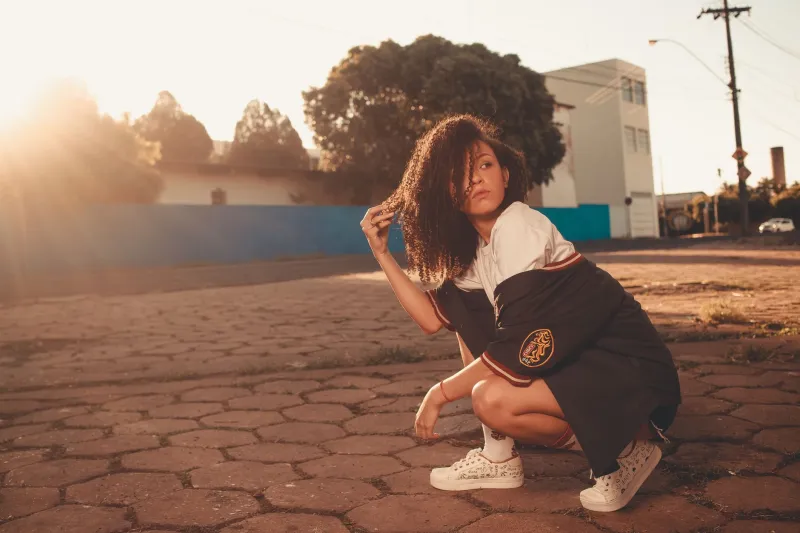
Nobody hands you a rulebook at the door. There's no laminated card that says wear this, not that. But the moment you walk into a real hip-hop event — whether it's a rooftop set in Atlanta, a warehouse party in Chicago, or a label showcase in New York — you feel it. The room is speaking a language, and your outfit is either fluent or it isn't.
The good news? This language is learnable. The even better news? It's not about spending the most money or chasing the loudest trend. It's about understanding the culture well enough to dress with it instead of just dressing at it.
The Foundation: Sneakers Still Run Everything
Let's start at the ground level, literally. In hip-hop spaces, your sneakers are your handshake. They communicate before you say a single word. And the unspoken rule isn't necessarily expensive — it's intentional.
A clean pair of Air Force 1s in an all-white colorway will always read correctly. So will a classic Jordan silhouette, a well-kept pair of New Balance 550s, or a vintage Adidas shell toe. What won't land? Anything that looks like it came straight off a clearance rack without thought, or conversely, anything that screams "I just Googled what sneakers rappers wear."
The distinction is context. At a more underground or indie hip-hop show, chunky skate-adjacent shoes or even a worn-in boot can work beautifully. At a major label event or a club night with a hip-hop format, you'll want something cleaner and more deliberate. Read the room before you lace up.
Fits That Signal You're In the Know
The silhouette conversation in hip-hop fashion has evolved — and honestly, it's more fluid than it's ever been. That said, there are still a few principles that hold across the board.
Proportion is everything. An oversized tee with a well-fitting trouser or a straight-leg denim hits differently than something that's just... baggy everywhere with no intention behind it. The goal is controlled looseness — relaxed without looking lost in your own clothes.
Logo placement matters. A vintage tee from a classic rap tour, an understated brand logo on a hoodie, or a subtle graphic that references something real in the culture — these all say something. A head-to-toe designer logo fit can work, but only if it's balanced. Drowning in monogram prints when you haven't earned that kind of flex in the room? That's a different story.
Layering is a power move. An open button-up over a fitted tee, a bomber jacket tied around the waist, a bucket hat that pulls the palette together — layering shows you thought about the outfit as a whole. It signals style literacy without requiring a single explanation.
Regional Flavor: One Culture, Different Dialects
Hip-hop is a national — really, global — culture, but it has regional accents in everything, including fashion. If you're traveling to an event or just want to honor where the music is coming from, it pays to understand these differences.
New York still operates on a certain downtown cool — vintage pieces, structured outerwear, low-key luxury. Think less flash, more precision. A tailored coach jacket or a well-sourced vintage graphic tee goes a long way in a city that invented this whole thing.
Atlanta leans into a different kind of confidence. Color, drip, and a certain Southern ease define the aesthetic. Trap-influenced style means you might see more designer labels, bold sneaker colorways, and fits that have a little more shine to them — but it's never accidental.
Los Angeles blends streetwear with laid-back West Coast energy. You'll see a lot of earth tones, vintage workwear, Dodgers or Lakers references, and the kind of casual cool that looks effortless because, out there, it kind of is.
Chicago and the Midwest have their own lane — a mix of utilitarian streetwear, vintage sportswear, and the kind of grounded style that doesn't need to announce itself. Clean, functional, and deeply rooted.
Knowing these dialects means you can dress appropriately for the specific cultural context of the event you're attending, not just hip-hop events as a monolith.
The Vintage Wave and Why It Works
One of the most dominant style movements in hip-hop spaces right now is the embrace of vintage and archival fashion. And it makes complete sense — hip-hop has always been about reclaiming, remixing, and recontextualizing culture. Wearing a vintage 1994 Rap-A-Lot Records tee or a deadstock track jacket from a brand that had a moment in the early 2000s isn't just a fashion statement. It's a reference. It's a nod to knowing where you come from.
The key to pulling off vintage in these spaces is authenticity. Thrift-store finds that are genuinely worn-in read as real. Fast fashion pieces designed to look vintage tend to read as costume. If you're building a vintage-forward wardrobe for hip-hop events, invest the time in actually sourcing pieces — local thrift stores, vintage boutiques, online resale platforms. The hunt is part of the point.
The Fine Line: Intentional vs. Trying Too Hard
Here's where it gets nuanced. There is absolutely such a thing as overdoing it, and hip-hop crowds — who have some of the most sophisticated aesthetic sensibilities anywhere — will clock it immediately.
Trying too hard usually looks like one of two things: over-referencing (wearing every hip-hop signifier at once, like a walking mood board) or under-confidence (wearing something that clearly isn't yours, whether it's a style you haven't grown into or a cultural reference you can't actually back up in conversation).
The antidote is simple: wear what you actually like. Style that comes from a genuine place — even if it's still developing — always reads better than style that's been assembled from a checklist. If you love sneakers, let that show. If vintage is your thing, lean in. If you're more of a minimalist, a clean, well-fitted monochromatic fit will hold up anywhere.
The hip-hop space has always had room for individual expression. What it doesn't have patience for is performance.
A Few Practical Notes Before You Walk Out the Door
- Check the venue type first. A club night has different expectations than a gallery opening or an outdoor festival. Dress for the specific event, not just the genre.
- Grooming counts. A sharp fit with an undone haircut or unkempt nails sends a mixed message. The whole picture matters.
- Accessories are a finishing touch, not a replacement for a fit. A chain, a fitted cap, or a great bag should complete the look — not save it.
- Comfort is underrated. If you can't move, dance, or stand for three hours in what you're wearing, it's not the right choice. Hip-hop events are physical experiences.
The silent dress code of hip-hop culture isn't about gatekeeping — it never has been. It's about respect. Respect for the culture, respect for the room, and respect for yourself. Dress like you know what it means to be there, and you'll never have to try too hard again.