Before You Sign That Contract: How to Tell If a Venue Actually Has the Vibe or Just the Invoice
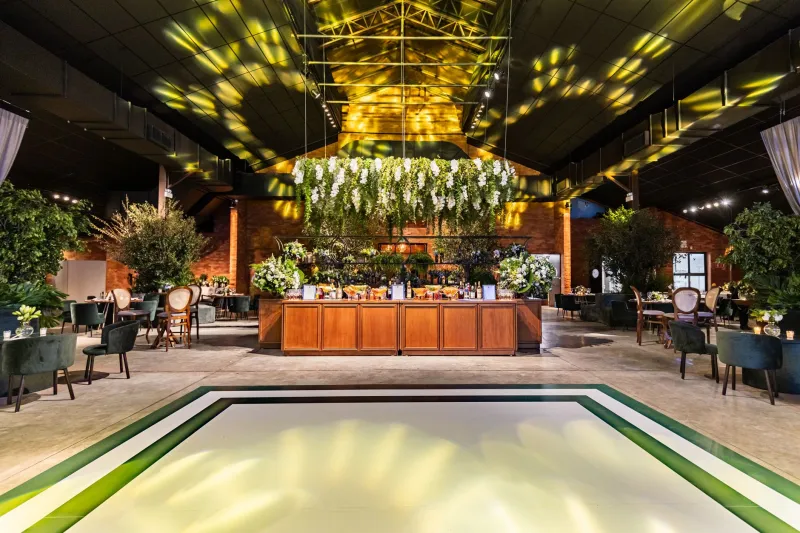
Let's be real for a second. You've graduated from hosting in your living room. You're ready to level up, and you've got a vision. But then you start touring venues and something weird happens — you keep walking into spaces that look great on paper and feel completely flat in person. High ceilings, mood lighting, a rooftop terrace, and yet… nothing. No soul. No spark.
That disconnect between what a venue costs and what it actually delivers is something every host eventually runs into. The good news? It's totally learnable. Reading a space is a skill, and once you develop it, you'll stop wasting money on rooms that just don't move the way you need them to.
Here's your full vibe check guide — the things to look for, the questions to ask, and the red flags that should send you walking right back out the door.
Start With Sound Before You Even Look Around
The moment you walk into any potential venue, do this one thing: clap your hands once. Loudly. Then listen.
What happens to that sound? Does it bounce off the walls and echo into chaos? Does it die immediately like the room swallowed it whole? Or does it land cleanly and settle? That single clap tells you more about a space's acoustic personality than any venue brochure ever will.
Hard surfaces — concrete floors, exposed brick, floor-to-ceiling glass — are gorgeous aesthetically but brutal acoustically. Sound bounces everywhere, conversations become impossible, and your DJ's carefully crafted mix turns into a muddy wall of noise. Soft surfaces like drapes, carpet, upholstered seating, and acoustic panels absorb that chaos and give music room to breathe.
The best venues have a balance. They've thought about sound. If you ask the venue coordinator about acoustics and they look at you like you just asked them to explain quantum physics, that's information.
Capacity Numbers Lie — Your Gut Doesn't
Every venue will hand you a capacity number. Ignore it. Not completely, but treat it as a ceiling, not a goal.
That number typically reflects fire code maximums, not party optimization. A room that holds 300 people at full legal capacity might feel claustrophobic and miserable at 250, or it might feel electric at 180. The layout matters more than the headcount.
When you're walking the space, visualize your crowd. Where's the natural gathering point? Where will people cluster when they first arrive? Is there room for a dance floor that doesn't require everyone to press against each other just to exist? Is there a corner where people can actually have a conversation without screaming?
The sweet spot for most events is filling a space to about 70-80% of its stated capacity. That's when a room feels alive — there's energy and movement, but nobody feels trapped. If the venue's "ideal" capacity and your actual guest list don't hit that sweet spot, you're either going to feel like you threw a party in an empty warehouse or a mosh pit. Neither is the vibe.
Lighting Is Everything and Most Venues Get It Wrong
Here's a truth that not enough people say out loud: bad lighting can ruin a perfect party. And good lighting can save a mediocre one.
When you tour a venue, ask them to show you the full range of their lighting setup — not just the default setting they use for corporate events. Can the lights dim low? Can they change color? Are there dedicated spots for a DJ booth or a focal point? Is there overhead lighting that'll wash everyone out under fluorescent white, or can it be adjusted to something warm and flattering?
Natural light is beautiful for daytime events, but for evening parties, you want control. Venues that rely entirely on fixed overhead lighting with no flexibility are telling you something: they weren't designed with atmosphere in mind. They were designed for function.
Also pay attention to where the dark spots are. Every room has them. Are they in awkward places — like right at the entrance where first impressions happen — or are they in corners where people naturally drift for more intimate conversations? Dark corners can be an asset. Dark entrances are a problem.
The Intangibles: What You Feel vs. What You See
This is where hosting becomes an art form. Some things about a venue cannot be measured or itemized on a quote sheet. They just are — and you either feel them or you don't.
Ask yourself: Does this space have a story? Converted warehouses in Brooklyn, old jazz clubs repurposed in Chicago, rooftop spots in Atlanta with a skyline that does the decorating for you — these spaces carry character that a generic event hall simply cannot manufacture. Guests feel that history even when they can't name it. It becomes part of the experience.
Also consider flow. Walk the space the way a guest would. Where do you enter? Where's the bar in relation to the dance floor? Are the bathrooms in a location that doesn't create a traffic jam in the middle of the action? Flow is the invisible architecture of a party. When it's right, the night moves effortlessly. When it's wrong, you spend the whole evening watching people bottle-neck in the worst possible spots.
Red Flags to Watch for During Walkthroughs
Some venues are good at selling themselves. Here's what to look past the pitch:
The staff is vague about vendor policies. If they can't give you a straight answer about whether you can bring in your own DJ, caterer, or decorator — or if every answer is "it depends" — that's a control issue that will cost you money and flexibility later.
The loading situation is a nightmare. Ask where your DJ sets up, where equipment comes in, and how long load-in takes. A venue with no dedicated load-in access, limited parking for vendors, or a freight elevator that requires scheduling three weeks in advance will stress you out before the party even starts.
It smells off. This sounds basic, but you'd be surprised. Venues that aren't properly maintained have a smell — old carpet, poor ventilation, a kitchen that hasn't been deep-cleaned recently. Your guests will notice even if they don't say anything. Smell is one of the strongest memory triggers there is, and you do not want the lasting memory of your event to be "that musty place on Fifth."
The coordinator is more interested in upselling than listening. A good venue coordinator asks questions about your event before they start quoting packages. If they launch straight into the premium bar package before you've even described your vision, they're not thinking about your party — they're thinking about their commission.
The Bottom Line
Price is not vibe. A $5,000 venue rental can feel like a community center with delusions of grandeur, and a $1,500 find in an up-and-coming neighborhood can feel like the most electric room in the city. The difference is almost never about the number on the invoice.
It's about acoustics, flow, lighting flexibility, honest capacity management, and that ineffable sense of character that makes a space feel like somewhere. Walk in with your eyes open, your instincts sharp, and your checklist ready. The right room for your event is out there — and when you find it, you'll feel it before you even ask the price.