After the Last Uber Pulls Off: How to Host an Afterparty That Hits Different
Everybody remembers the party. But the people who really remember the night? They stayed after.
There's something almost sacred about that 2 AM energy when the main crowd has thinned out, the playlist shifts down a gear, and suddenly you're not performing anymore — you're just living. The afterparty isn't a consolation prize for people who didn't want to go home. Done right, it's the whole point. It's where the real conversations happen, where the memories get made, and where your reputation as a host either gets cemented or quietly unravels.
But here's the thing nobody tells you: the afterparty is not just a smaller version of the party. It's a completely different animal. And if you treat it like a leftover, it'll feel like one.
The Invite Is Everything (And It's Never a Mass Text)
The single biggest mistake people make with afterparties is inviting too many people. The whole appeal of the after is exclusivity — not in a bougie, velvet-rope way, but in the sense that the room should feel curated. You want energy that compounds, not cancels out.
Forget the group chat blast. The afterparty invite is a one-on-one thing. A tap on the shoulder. A quiet "you staying?" That personal touch does two things: it makes the person feel genuinely wanted, and it filters out anyone who's just riding the wave. You're looking for the people who add something — the storytellers, the ones who actually vibe with the music, the person who always ends up in the best conversation at every party.
Aim for somewhere between eight and fifteen people depending on your space. Enough to keep energy alive, small enough that nobody gets lost in a corner.
Shift the Whole Vibe on Purpose
One of the most underrated moves in afterparty hosting is the deliberate vibe reset. The main event had its energy — probably higher tempo, more social, more performative. The after needs to feel like a gear change, not a continuation.
That starts with the playlist. This is not the moment for the same bangers you were running at midnight. Think lower BPM, more texture — late-night R&B, lo-fi hip-hop, some classic soul, maybe a little neo-soul if the room's feeling it. Artists like Sade, Thundercat, Erykah Badu, or a smooth J. Cole deep cut do more for afterparty energy than anything that peaked on TikTok last week.
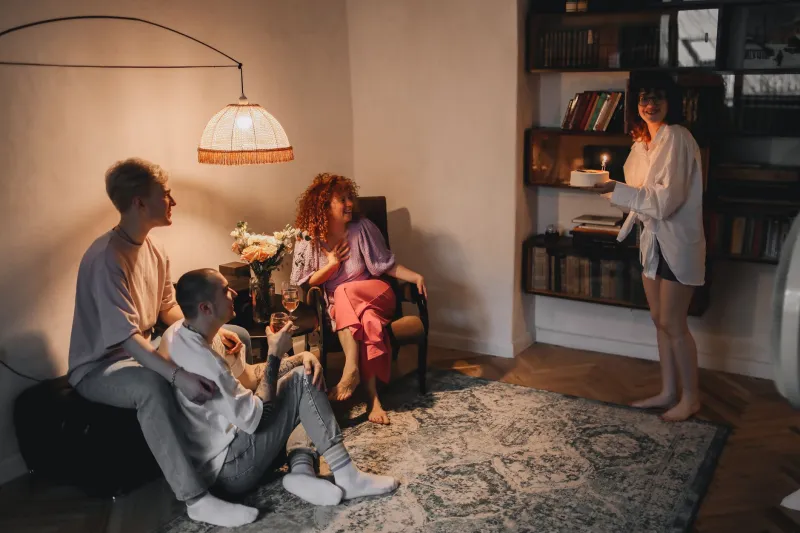
The lighting matters just as much. Kill the overhead lights completely if you haven't already. Lamps, candles, maybe some LED strips on a warm amber setting. The goal is a room that feels like it exists outside of regular time. When people can't quite tell if it's 2 AM or 4 AM, that's when the magic happens.
Rearrange the seating if you can. Drag chairs into a circle, pull cushions to the floor, cluster people closer together. The physical setup should say we're settling in, not this is still a standing event.
Handle the Logistics Before They Handle You
Let's be real for a second: the afterparty is also where things can go sideways if you're not intentional about it. Noise complaints don't care that you're having the time of your life. Your neighbors absolutely do care that it's 3 AM and they can hear bass through their bedroom wall.
Before the night even starts, do a quick temperature check on your situation. If you're in an apartment building, you already know the threshold. If you're in a house, you've got a little more runway — but not unlimited. The general rule is that volume should drop noticeably when the main party ends. The afterparty vibe actually supports this naturally, since the energy is supposed to be more intimate anyway.
If you live somewhere with strict noise ordinances (looking at you, most major US cities after 11 PM), have a plan for transitioning sound indoors, closing windows, or moving the party to a back room or basement. A noise complaint that shuts everything down at 1:30 AM is not just an inconvenience — it kills the vibe in a way that's almost impossible to recover from.
Also: food. People forget about food. After a few hours of drinking and dancing, your crew is hungry, and a thoughtful snack spread will make you a legend. It doesn't have to be elaborate — a solid charcuterie situation, some good chips and dip, late-night delivery from a spot everyone loves. The act of eating together naturally deepens the intimacy of the room.
Protect the Energy Like It's Your Job
Because at this point, it kind of is.
The afterparty is small enough that one disruptive person can genuinely derail the whole thing. Someone who's had too much, someone who brings conflict in from earlier in the night, someone who won't stop being loud when the room is clearly in a chill space — these are threats to the experience you've built.
As the host, you have full permission to manage this directly. That might mean quietly suggesting someone call it a night. It might mean redirecting a conversation that's getting heated. It might mean physically moving yourself and a few key people to a different part of the space to let the energy reset.
You're not being rude. You're being a good host. There's a difference.
Know When to Call It
This is the part nobody wants to talk about, but it's honestly the most important skill in afterparty hosting: knowing when to end it before it ends you.
The best afterparties have a natural peak — a moment where the conversation is flowing, the music is perfect, and everyone is genuinely present. Your job is to recognize that moment and start gently winding things down while you're still in it, not after it's passed.
Once people start getting sleepy, going quiet in a checked-out way, or pulling out their phones to scroll, the peak has come and gone. Ending on the downslope always feels worse than ending at the top.
Flip the lights up slightly. Let the playlist drift toward something that signals a natural close. Thank people for staying, genuinely. Walk them to the door. The ritual of a real goodbye is part of what makes the night feel complete rather than abandoned.
The Afterparty as Art Form
Here's the bigger truth underneath all of this: the afterparty is where you find out who your people actually are. The pretense drops. The performance ends. What's left is real — real conversation, real connection, real memory-making.
That's worth being intentional about. It's worth planning for, curating, and protecting. Not because you're trying to manufacture a moment, but because you understand that the best moments don't just happen — they happen because someone cared enough to set the conditions right.
The main party is the show. The afterparty is the truth.
And the truth, when you get it right, is always the part people talk about longest.