11 PM Is Where Parties Go to Die — Unless You Know These Moves
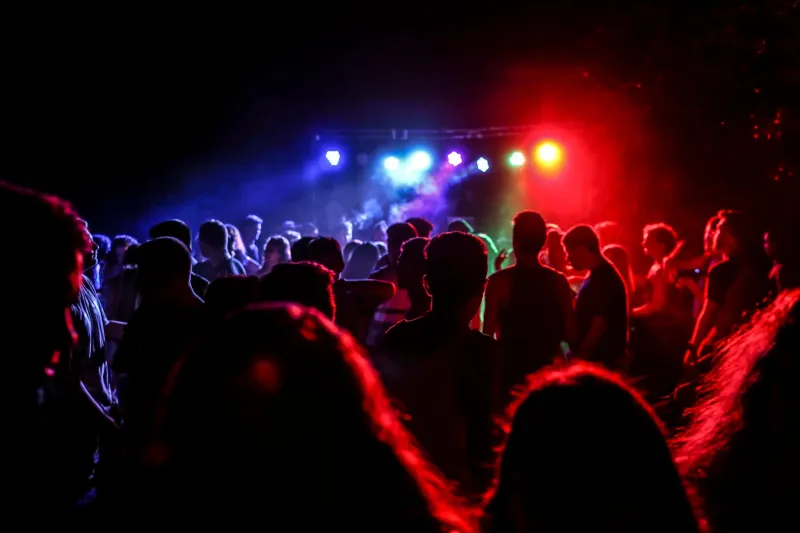
You've seen it happen. The party is absolutely cooking — drinks are flowing, the floor is packed, someone's doing that thing where they're dancing and holding their cup without spilling a drop. Everything is perfect. Then, somewhere between 10:45 and 11:15, the air shifts. People start checking their phones. A small cluster migrates toward the door. The energy that felt unstoppable twenty minutes ago is now leaking out like a slow tire.
This isn't a vibe problem. It's a physics problem. And once you understand why it happens, you can stop it cold.
The Science Behind the Slump
Here's what nobody tells you when you're busy curating your playlist and stacking your bar cart: party energy operates on a biological clock, not just a social one. Most guests arrive with a finite tank of social energy, and after two to three hours of sustained stimulation — loud music, conversation, alcohol processing, sensory input — the human nervous system starts looking for an off-ramp.
Around 11 PM at the average evening party (one that kicked off around 8 or 9), guests are hitting what psychologists sometimes call social saturation. It's not boredom. It's depletion. The brain has been running hot, and without a reset signal, it defaults to the easiest available option: leaving.
The cruel irony? This dip is so predictable that most hosts have already lost the room before they even notice it's happening.
Why the DJ Transition Matters More Than the Song
One of the biggest tactical mistakes hosts make at the 11 PM mark is letting the music keep doing the same thing it's been doing all night. If your DJ or playlist has been riding a steady energy level for three hours, guests have acoustically adapted to it. It's become wallpaper.
What you need is a disruption — not a chaotic one, but a deliberate one. Think of it as a musical reset button.
The move here is a controlled drop in energy before a climb. Have your DJ pull back — not kill the vibe, but soften it intentionally for about five to seven minutes. A slower groove, a neo-soul interlude, maybe some classic R&B that makes people feel nostalgic and warm. This gives the room permission to breathe. Guests who were about to leave suddenly feel like the party just got more intimate. They stay.
Then — and this is the part that separates a good host from a great one — you build back up. Harder. More intentional. The contrast between the lull and the rebuild creates a surge of energy that feels brand new, even to people who've been there all night. It's the same psychology behind a concert encore. Nobody's actually surprised the artist comes back out. But it still goes absolutely crazy every single time.
The Surprise Moment: Your Secret Weapon
If the DJ transition is the science, the surprise moment is the art. Every party that has ever had a legendary second half had something that happened unexpectedly — a moment that gave people a story to tell the next morning.
This doesn't have to be elaborate or expensive. It just has to be unexpected.
Maybe it's a late-night food drop — a tray of sliders or a hot nacho setup that appears out of nowhere around 11:30. (Food is criminally underrated as a party revitalizer. Nothing snaps people out of a low-energy haze like the smell of something good coming out of the kitchen.) Maybe it's a quick game that pulls a crowd together. Maybe it's a special guest — a friend who's a local artist who does a quick two-song set, or someone who can flip the aux and take the room somewhere completely unexpected.
The point is that surprise interrupts the brain's exit narrative. Your guests were mentally calculating their Uber ride home, and then something happened that made them think, wait, what is this? That curiosity buys you another hour, easy.
Spatial Flow: The Underrated Party Variable
Here's something most hosts never think about: where people are standing when the energy dips directly affects whether they stay or go. When guests cluster near exits, walls, or the edges of the space, they're physically positioning themselves for departure. The room starts to feel empty even when it isn't.
Around 10:30 — before the slump hits — make a deliberate move to shift the spatial energy. This could mean opening up a new area of the space that wasn't active earlier. A back patio that gets unlocked. A second room with a different vibe — maybe lower lighting, a slower playlist, somewhere people can actually have a real conversation. Giving guests a new destination within the party resets their mental map of the space and makes the whole event feel fresh.
You can also use lighting to pull people toward the center. A subtle shift in where the brightest, most dynamic light is focused will naturally draw bodies in that direction. It sounds almost too simple, but spatial psychology is real — people move toward warmth and light, and away from dark corners when they're ready to disengage.
The Host Check-In: Your Most Powerful Tool
All of this strategy means nothing if you're not paying attention to your own room. The best hosts are part architect, part performer, part air traffic controller. You have to be reading the energy constantly — not glued to your phone, not deep in a conversation you can't exit, but present and scanning.
Set a mental checkpoint for 10:45 PM. Do a lap. How full is the dance floor? Are people's drinks empty? Is the energy in different parts of the room matching, or is there a dead zone developing somewhere? What you find in that lap tells you exactly which lever to pull — the DJ transition, the surprise moment, the spatial reset, or some combination of all three.
The 11 PM slump isn't a failure. It's a test. And the hosts who know it's coming are the ones whose parties become the ones people are still talking about on Monday.
Keep the Magic on Your Side of Midnight
Every great party has a second act. The difference between the ones that find it and the ones that fizzle out is almost never about the music selection or the guest list or the venue — it's about whether the host was awake enough to recognize the moment and bold enough to make a move.
The clock hits 11 and the room starts to thin? That's not the end. That's your cue. Drop the energy, build it back, hit them with something they didn't see coming, and watch your party earn its legend status — one unexpected second wind at a time.